
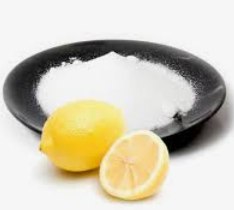
Anhydrous Citric Acid
A Sourcing Guide for Food & Industrial Buyers
If you manufacture beverages, packaged food, detergents, or industrial cleaning products, there’s a good chance citric acid is already on your raw material list. It’s one of the highest-volume organic acids traded globally — and for good reason. But not all citric acid on the market performs the same way in production, and buyers who don’t ask the right questions upfront often end up dealing with caking, inconsistent acidity, or failed customs documentation down the line.
This guide covers what anhydrous citric acid actually is, where it’s used, and what to check before placing a bulk order.
What Is Anhydrous Citric Acid?
Anhydrous citric acid (CAS 77-92-9) is the water-free form of citric acid, produced through fermentation and purification into a fine white crystalline powder. Compared to its monohydrate counterpart, the anhydrous form has lower moisture content, which translates directly into practical advantages for buyers:
- Better resistance to caking during long-distance shipping and humid storage conditions
- Faster, more consistent dissolution in both cold and hot water — important for automated dosing lines
- More stable batch-to-batch acidity, which matters for formulation consistency
For B2B buyers, these aren’t just technical details — they directly affect production downtime, product consistency, and complaint rates from your own customers.
Two Grades, Two Very Different Applications
Food Grade — Built for Consumption
Food-grade anhydrous citric acid is manufactured to meet international standards such as BP, USP, and FCC, with tightly controlled limits on heavy metals and impurities. It’s a staple ingredient across:
- Carbonated beverages and fruit juices
- Bottled tea and energy drinks
- Candy, jam, and canned fruit
- Baked goods and dietary supplements
- Pharmaceutical oral formulations
In these applications, it functions as an acidity regulator, flavor enhancer, and natural preservative — helping balance sweetness, boost freshness, and extend shelf life.
Industrial Grade — Built for Performance
Industrial-grade anhydrous citric acid prioritizes high purity and low insoluble matter, making it well suited for:
- Boiler and pipeline descaling
- Water treatment and metal surface passivation
- Detergent and household cleaning formulations
It’s increasingly used as a biodegradable, environmentally friendly alternative to phosphate-based additives — a shift many detergent manufacturers are actively making to meet tightening environmental regulations.What to Check Before You Order in Bulk
What to Check Before You Order in Bulk
Documentation
A reliable shipment should come standard with a batch-specific Certificate of Analysis (COA) and Material Safety Data Sheet (MSDS). Without these, customs clearance delays are common — and for food-grade orders, missing documentation can mean rejected shipments.
Packaging Suited for Export
Moisture-proof packaging matters more than buyers often expect. Standard export packaging is typically 25kg PE-lined woven bags, with jumbo bag bulk options available for larger orders to reduce per-unit logistics cost. Poor packaging is one of the most common — and most avoidable — causes of caking complaints after a long sea freight journey.
Supplier Consistency
Ask whether your supplier maintains year-round safety stock. Citric acid demand is steady but production capacity varies by supplier — buyers sourcing on tight production schedules should confirm lead times before committing to a contract, not after.
Sample Verification
Before committing to a bulk order, request a sample for formulation testing. A supplier confident in their product quality should have no issue supporting trial orders ahead of a larger purchase agreement.
Why Buyers Switch Suppliers
The most common complaints we hear from international buyers switching away from previous citric acid suppliers aren’t about price — they’re about consistency: unexpected caking on arrival, moisture content that varies batch to batch, or sour intensity that shifts enough to throw off a finished formulation. These issues are almost always traceable to crystallization process control and packaging quality, not the raw material itself.
This is why buyers evaluating a new supplier should ask pointed technical questions — moisture content specs, crystallization method, and packaging materials — rather than comparing quotes on price alone.
The Bottom Line
Anhydrous citric acid is a deceptively simple-looking commodity — but sourcing it reliably at scale requires attention to grade selection, documentation, packaging, and supplier consistency. Getting these details right upfront saves far more in avoided downtime and rejected shipments than it costs in extra diligence.
Sourcing anhydrous citric acid for your production line?
Get FOB/CIF pricing, batch COA, and free samples for formulation testing — quotes typically returned within 24 hours.
Email: jessie@linkwinchem.com
Call us:+86 185 9195 9408